

October 16, 2025
Think of proper lubrication as your vehicle’s insurance policy, one that pays dividends every mile you drive. Whether you’re maintaining a daily driver, managing a fleet, or pushing performance limits on the track, understanding how to lubricate your vehicle properly can mean the difference between years of reliable service and costly breakdowns.
Proper lubrication can significantly extend vehicle life and reduce maintenance costs. In practice, that translates to fewer repairs, longer service intervals, and better long-term performance.
Contents
- How Often Should You Replace Essential Vehicle Lubricants?
- Motor Oil Is Your Engine’s Best Friend
- Transmission Fluid Is The Unsung Hero
- Brake Fluid Is Where Safety Meets Chemistry
- Chassis Lubrication Is The Foundation of Smooth Operation
- Differential and Transfer Case for Heavy-Duty Protection
- Professional Tips for Proper Vehicle Lubrication
- Creating Your Lubrication Schedule
- When to Seek Professional Help
- Your Partner in Proper Lubrication
How Often Should You Replace Essential Vehicle Lubricants?
These service intervals are general industry recommendations and can vary based on your vehicle’s make, model, age, and driving conditions. Always refer to your owner’s manual or consult a certified mechanic for manufacturer-specific maintenance schedules, but this quick guide provides a pretty standard reference point.
| Lubricant Type | Recommended Service Interval |
| Synthetic Motor Oil | 7,500-15,000 miles |
| Conventional Motor Oil | 3,000-5,000 miles |
| Transmission Fluid | 30,000-60,000 miles |
| Brake Fluid | Every 2 years |
| Power Steering Fluid | 50,000 miles |
| Chassis Grease Points | Every 3,000-5,000 miles |
Motor Oil Is Your Engine’s Best Friend
Your engine is essentially a controlled explosion chamber with hundreds of moving parts. Without proper lubrication, those parts would weld themselves together in minutes. Modern engines demand more from their oil than ever before. Tighter tolerances, higher operating temperatures, and extended drain intervals all require synthetic formulations that can handle the heat.
According to SAE J300 requirements, oils are classified by viscosity, but advanced synthetic formulations tend to maintain protective film strength under stress better than many conventional oils, thanks to superior shear stability, additive chemistry, and thermal resistance.”
What motor oil does for you:
- Creates a protective barrier between moving metal parts
- Carries heat away from critical components like pistons and bearings
- Suspends contaminants and carries them to the filter
- Prevents corrosion during storage periods
Proper oil selection depends on driving conditions. Stop-and-go city driving, frequent idling, or towing heavy loads are all classified as severe service. Under these conditions, oil degrades faster, so even if manufacturer guidelines suggest extended intervals, more frequent changes help preserve engine health.
Transmission Fluid Is The Unsung Hero
Your transmission is one of the most complex systems in your vehicle, and it relies entirely on specialized fluid to function. This isn’t just lubricant; it’s hydraulic fluid, coolant, and friction modifier all rolled into one. When transmission fluid breaks down, you’re looking at repairs that can cost more than some vehicles are worth.
Modern transmission fluid types:
- Dexron/Mercon (Most GM and Ford vehicles)
- CVT Fluid (Continuously Variable Transmissions)
- Synthetic ATF (High-performance applications)
- Manual Transmission Fluid (Vehicle-specific formulations)
Here’s something many people don’t realize: transmission fluid not only wears out from use but also breaks down from heat and time. Even if you’re not hitting high mileage, that fluid is aging. The latest ATF formulations incorporate advanced friction modifiers and anti-wear additives, but they still need regular replacement to maintain peak performance.
Brake Fluid Is Where Safety Meets Chemistry
Brake fluid takes a lot of heat—literally. Over time, it absorbs moisture from the air, which lowers its ability to handle high temperatures. That’s bad news when you’re braking hard or driving down a mountain because the moisture can turn to vapor, making your brake pedal feel soft or sink to the floor.
Critical safety reminder: If your brake pedal feels spongy or travels further than usual, don’t wait. Have your brake system inspected immediately.
Chassis Lubrication Is The Foundation of Smooth Operation
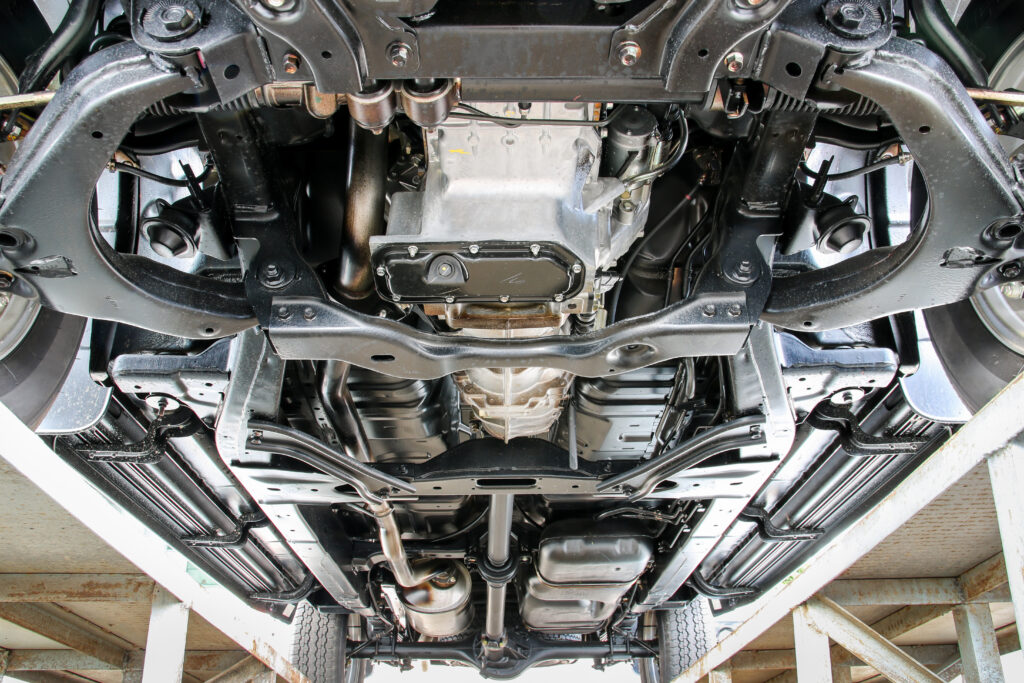
Modern vehicles have fewer grease fittings than older models, but the ones that remain are critical. Ball joints, tie rod ends, and suspension components all rely on high-temperature lithium grease (NLGI #2) to function properly. This isn’t the place to cut corners with cheap grease.
Quality chassis grease provides:
- Superior adhesion to metal surfaces under extreme loads
- Resistance to water washout during wet conditions
- Protection against extreme pressures and shock loads
- Temperature stability from -40°F to 350°F
Think of chassis lubrication as preventive medicine for your suspension and steering components. A few dollars spent on quality grease and regular service can prevent hundreds or thousands in component replacement costs.
Differential and Transfer Case for Heavy-Duty Protection
If you tow, haul, or drive in challenging conditions, your differential and transfer case work harder than most people realize. These components require specialized gear oils meeting API GL-5 specifications—formulations designed to handle extreme pressures and temperatures that would destroy regular motor oil.
Modern synthetic gear oils offer:
- Extended drain intervals up to 100,000 miles
- Superior protection against scoring and gear wear
- Improved cold-weather performance for winter starts
- Enhanced thermal stability for heavy-duty applications
The investment in quality gear oil pays for itself in extended component life and reduced maintenance downtime.
Professional Tips for Proper Vehicle Lubrication
- Document Everything: Keep detailed records of all lubrication services. This isn’t just good practice—it’s proof of proper maintenance if warranty issues arise.
- Check Fluid Levels Monthly: A quick monthly inspection can catch small leaks before they become major problems. Low fluid levels often indicate leaks that need attention.
- Consider Your Operating Conditions: Severe service conditions like towing, dusty environments, extreme temperatures, or stop-and-go driving may require more frequent service intervals than your owner’s manual suggests.
- Invest in Quality Tools: Proper grease guns and fluid transfer equipment prevent contamination and ensure accurate application. Clean tools mean clean lubricants.
Creating Your Lubrication Schedule

Every vehicle is different, but here’s a framework that works for most applications: (budget approximately $900 per year for routine maintenance, including finding the best deals on oil changes):
- Monthly: Check all fluid levels and inspect for leaks
- Every Oil Change: Inspect chassis grease fittings and lubricate as needed
- Annually: Check brake fluid condition and color
- Per Manufacturer Schedule: Service transmission, differential, and transfer case
When to Seek Professional Help
While many lubrication tasks are DIY-friendly, some may require professional attention:
- Transmission services (especially CVT and modern automatics)
- Brake system bleeding and fluid replacement
- Differential services requiring special tools
- Any system showing signs of contamination or unusual wear
Your Partner in Proper Lubrication
At Factory Direct Oil, we understand that proper lubrication isn’t just about following a schedule, it’s about understanding your equipment and choosing products that match your specific needs. Whether you’re maintaining a high-mileage daily driver or preparing for racing season, we’re here to help.
Remember: the cost of premium lubricants is always less than the cost of equipment failure. When you invest in quality products and maintain proper service intervals, you’re not just protecting your vehicle—you’re protecting your investment and ensuring reliable performance when you need it most.