


October 9, 2025
Contents
- Drag Car Engines vs Standard Car Engines
- All Engines Need to Be Protected Against Friction
- Lubrication Requirements Vary Depending on the Engine’s Demands
- Both Everyday Engines and Racing Motors Benefit from Synthetic Lubricants
- Racing Oil Meets the Extreme Demands of High-Performance Engines
- Racing Engines Require Superior Heat Protection
- The Right Lubricant for the Synthetic Oil Change of All Your Vehicles.
Drag Car Engines vs Standard Car Engines

Drag racing is an organized motorsport where two vehicles compete head-to-head on a straight track, accelerating at full throttle to cross the finish line first. It’s one of the oldest and most thrilling forms of motorsport, dating back nearly as far as the automobile itself.
While the spirit of drag racing remains the same, much has changed over the years. Advances in technology, engineering, and safety regulations have transformed both the sport and the machines that power it. Modern drag racing vehicles operate at extreme speeds and under intense stress, demanding precision-engineered components and maintenance products capable of keeping up with their performance.
If you’re new to the world of drag racing, it’s crucial to understand that racing engines have very different lubrication requirements compared to standard road vehicles. The immense heat, friction, and pressure generated during a race require oils specifically formulated for high-performance engines. Using the same oil you’d put in a daily commuter simply won’t provide the protection or consistency a racing motor needs.
The following sections will help you understand why racing engines require specialized lubrication and how choosing the right oil can make all the difference in performance, reliability, and longevity on the track.
All Engines Need to Be Protected Against Friction
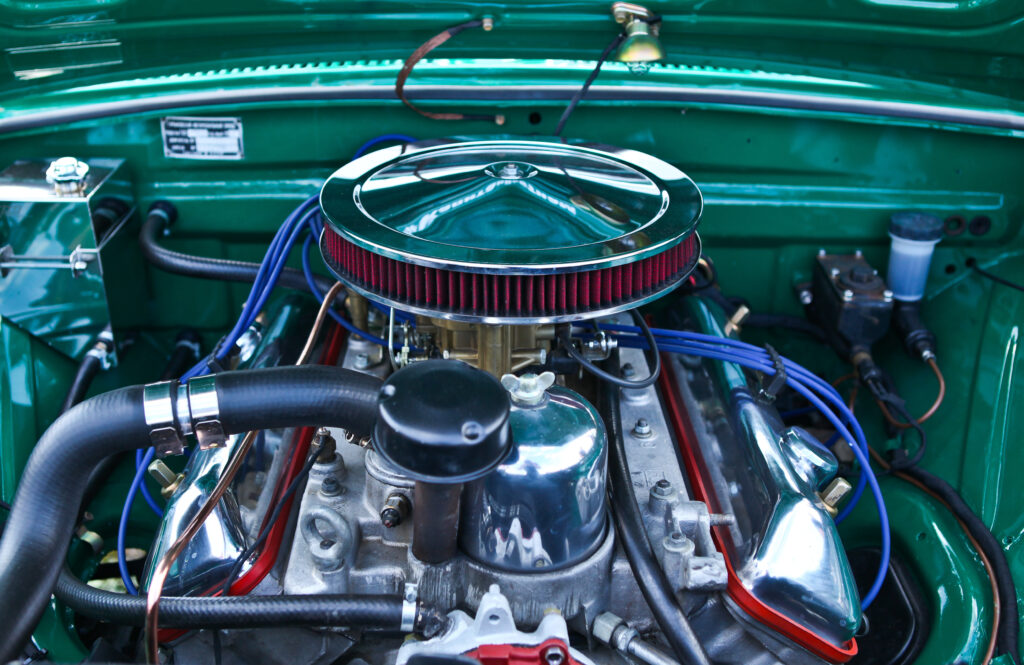
Our engines are the hearts of our vehicles, performing the demanding work that powers every drive or race. Whether you’re behind the wheel of a high-performance drag car or an everyday commuter, protecting the engine from friction and heat is essential to maintaining efficiency, reliability, and longevity.
Lubricants play a crucial role in this protection. They create a thin, durable film between moving parts to minimize metal-to-metal contact and reduce wear. However, not all lubricants are created equal. There’s a wide range of motor oils and specialized lubricants, each designed to meet specific performance requirements. A racing engine that operates at extreme RPMs and temperatures, for instance, requires a much more robust oil formulation than a standard street engine.
Understanding the differences between these lubricants, and selecting the right one for your application ensures that your engine stays protected, performs at its best, and avoids costly damage over time.
Lubrication Requirements Vary Depending on the Engine’s Demands
Every engine needs quality lubrication, but not all engines require the same level or type of protection. A standard passenger vehicle and a high-performance racing engine operate under very different conditions, and their lubrication needs reflect that.
In everyday driving, your car experiences moderate temperatures, steady RPMs, and lighter loads. Even so, insufficient or poor-quality lubrication can still cause wear on internal engine components. As moving parts generate friction, they also produce heat, which can accelerate wear if not properly managed.
Motor oil’s primary job is to reduce friction and help dissipate heat, creating a protective barrier that allows components to move smoothly without grinding against each other. In racing applications, this role becomes even more critical, where extreme speeds and heat demand advanced oils with higher film strength and thermal stability.
Both Everyday Engines and Racing Motors Benefit from Synthetic Lubricants
No matter what you drive, whether it’s a daily commuter or a high-performance drag car, synthetic lubricants offer the best protection and performance. Their specialized molecular structure is more durable than conventional oils, maintaining stability and protection even under extreme temperatures and stress.
Synthetic oils provide consistent viscosity, resist breakdown, and reduce friction more effectively than traditional motor oils. This makes them ideal for both regular engines that face daily wear and racing motors that operate under intense heat and pressure.
At Factory Direct Oil Inc., we proudly carry AMSOIL synthetic lubricants, engineered to meet the specific demands of any engine type. Whether you need synthetic motor oil for your personal vehicle or a racing-grade formula for the track, you’ll find premium solutions designed to protect, perform, and last.
Racing Oil Meets the Extreme Demands of High-Performance Engines
Racing oils are specifically engineered to perform under the intense conditions that high-speed motorsports create. Drag racing engines, in particular, operate at the limits of mechanical endurance, running at maximum throttle for short bursts while generating immense heat and pressure.
Unlike standard automotive engines, a racing engine produces 1.5 to 3 times more horsepower, which means significantly higher friction and extreme operating temperatures. To withstand this stress, racing oils are formulated with specialized additive packages and enhanced thermal stability to maintain protection when conventional lubricants would break down.
These performance-driven oils contain advanced anti-wear agents, friction modifiers, and detergents that help reduce metal-to-metal contact and prevent deposits even under punishing conditions. Their superior film strength ensures that vital components stay protected, allowing the engine to perform at peak power while minimizing wear.
In short, racing oil isn’t just stronger, it’s purpose-built for the unique challenges of high-performance driving. When every fraction of a second matters, using the right lubricant can be the difference between winning the race and blowing the engine.
Racing Engines Require Superior Heat Protection

Extreme heat is one of the biggest challenges for any engine, but in racing, it’s magnified. Not all motor oils can maintain their viscosity and protective properties under these intense conditions. When temperatures soar, many conventional oils begin to thin out or break down, reducing their ability to protect critical components.
That’s why synthetic racing oils are the top choice for high-performance applications. They’re formulated to resist oxidation, maintain consistent viscosity, and provide a durable film of protection even under extreme stress and heat. This ensures that racing engines stay lubricated and protected from wear during high-speed runs and rapid acceleration.
However, it’s important to remember that racing oil is designed for the track, not the street. The additives and chemistry that make it ideal for short, high-intensity performance aren’t suitable for everyday driving. In daily-use engines, racing oils can actually lead to faster wear, reduced fuel efficiency, and compatibility issues with emission systems.
In short, use the right oil for the job. Racing oils are unbeatable under pressure, but your everyday vehicle deserves a formula built for consistent, long-term protection, like AMSOIL’s line of high-quality synthetic motor oils tailored to your specific driving needs.
The Right Lubricant for the Synthetic Oil Change of All Your Vehicles.
Allow all of your vehicles to perform at their very best with AMSOIL lubricants. No matter what type of engine oil you are looking for, whether it is for your high-octane drag racer, your everyday commuter, your motorcycle, or even lubrication for your boat, at Factory Direct Oil Inc you will find the product that will always put you in pole position. Contact Factory Direct Oil to get what you need to stay ahead of the game, and look into becoming a Preferred Customer with us as well.